
Interview: Virtual Reality and Augmented Reality – Changing How We Learn and Play

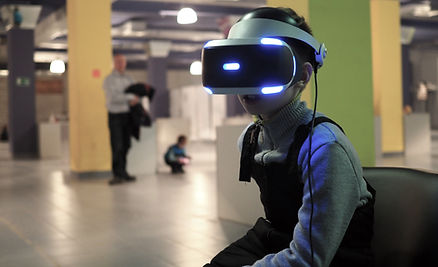
Interviewer (Anna):Today, I’m speaking with Dr. James Carter, a technology expert who specialises in immersive technologies like Virtual Reality (VR) and Augmented Reality (AR). Welcome, James! To start off, could you explain what exactly VR and AR are, and how they differ?
Dr. Carter:Thank you, Anna. That’s a great question. Virtual Reality is a fully immersive technology that transports users into a completely digital environment using a headset, often combined with sensors that track movement. Augmented Reality, on the other hand, overlays digital information onto the real world, usually via smartphones or AR glasses, enhancing the user’s perception rather than replacing it entirely.
Anna:So, VR creates a whole new world, whereas AR enhances the real world. I’ve heard some people ask whether VR can be used beyond gaming. How would you respond to that?
Dr. Carter:Many have wondered if VR’s applications are limited to entertainment, but in fact, the technology has made remarkable strides in education, training, and healthcare. For example, simulations that allow medical students to practise surgery without risks are becoming increasingly common. I was recently asked whether VR could completely replace traditional classrooms, and my response was that while it might never fully replace face-to-face learning, it certainly complements it by providing immersive, hands-on experiences that are otherwise impossible.
Anna:That’s fascinating. You mentioned simulations — which are crucial in VR. Could you elaborate on how simulations are changing the learning experience?
Dr. Carter:Absolutely. Simulations create controlled virtual environments that mimic real-life scenarios. One example is flight simulators for pilot training, which have been around for decades, but VR takes this concept further by immersing learners in a 360-degree environment where they can interact naturally. The ability to manipulate objects and respond to dynamic situations within a virtual environment helps users to deepen their understanding and retain information better.
Anna:I imagine that being able to interact with a virtual environment rather than just watching a video or reading a textbook must be very beneficial.
Dr. Carter:Indeed. I’ve observed students who were initially sceptical about VR reporting that immersing themselves in these virtual worlds helped them stay focused and engaged. Being able to see and handle 3D models, for example, allows learners to grasp complex subjects, like anatomy or engineering, more intuitively. In fact, educators who have integrated VR into their curriculum often report that students develop higher-order thinking skills and problem-solving abilities more rapidly.
Anna:That brings me to AR — which seems to offer a different experience by blending digital content with the real world. How is AR changing the way we play and learn?
Dr. Carter:AR provides an augmented experience that enriches reality rather than replacing it. Games like Pokémon GO, which many people are familiar with, demonstrate AR’s potential to encourage physical movement and social interaction. In education, AR apps allow students to point their devices at textbooks or physical objects and see interactive 3D animations that explain concepts in real time. This technology also assists professionals in fields like architecture and manufacturing by enabling them to visualise complex designs directly overlaid on real-world sites or objects.
Anna:I’ve noticed that some users find VR headsets uncomfortable or isolating. Are there any developments to address these concerns?
Dr. Carter:That’s a common observation. Early VR headsets were bulky and could cause motion sickness, but recent innovations have made them lighter, more ergonomic, and better at syncing visuals with movement, reducing discomfort. Moreover, developers are designing social VR platforms where users can interact with others in shared virtual environments, alleviating the sense of isolation. AR, since it keeps users grounded in the real world, generally doesn’t have these issues.
Anna:How do you see the future of VR and AR evolving, especially in terms of learning and play?
Dr. Carter:I believe we’ll see more seamless integration of these technologies into everyday life. Advances in AI and machine learning could allow virtual environments to adapt dynamically to individual users’ needs, making learning more personalised. As for play, the line between virtual and physical experiences will continue to blur, offering richer, more interactive entertainment options. People often ask if VR and AR could eventually replace traditional screens, and while that’s possible, I think these technologies will more likely coexist with current devices, offering alternative ways to consume content.
Anna:That’s insightful. Finally, could you share what advice you’d give to educators and gamers who are interested in exploring VR and AR?
Dr. Carter:Certainly. For educators, I’d suggest focusing on integrating these tools in ways that actively involve students, rather than using them as passive novelties. It’s important to evaluate the content critically and ensure it aligns with learning objectives. For gamers and general users, I’d recommend trying out different experiences to find what truly immerses and engages you, but also being mindful of time spent and taking breaks to avoid fatigue. Both VR and AR offer incredible potential, but like any technology, they work best when used thoughtfully.
Anna:Thank you, James, for sharing your expertise. It’s clear that VR and AR are reshaping not just how we play, but also how we learn and interact with the world around us.
Dr. Carter:Thank you, Anna. It’s been a pleasure discussing these exciting technologies.
Summary
Virtual Reality (VR) and Augmented Reality (AR) are rapidly transforming how people learn and play. VR provides a fully immersive experience by placing users inside a digital environment through headsets, allowing them to interact with simulations that replicate real-life scenarios. This technology is increasingly used beyond gaming, notably in education and professional training, offering hands-on experiences that improve engagement and understanding.
AR, in contrast, overlays digital information on the physical world, enriching rather than replacing reality. It has applications in gaming, education, and industry, helping users visualise and interact with data in real time.
While early VR devices had issues such as discomfort and isolation, advancements have made them more user-friendly and social. The future points toward more personalised and adaptive virtual environments that complement traditional learning and entertainment. Experts advise thoughtful integration of VR and AR to maximise their educational benefits and encourage mindful use among gamers.
📋 Comprehension Questions
1. What is the main difference between Virtual Reality and Augmented Reality, according to Dr. Carter?
2. How has VR been applied outside of gaming, based on the interview?
3. What benefits do simulations in VR provide for learners?
4. What is one example of how AR enhances real-world experiences mentioned in the interview?
5. What issues with VR headsets were identified, and how are they being addressed?
6. How might VR and AR technologies evolve in the future, particularly in education?
7. What advice does Dr. Carter give to educators who want to use VR and AR in their teaching?
📝 Vocabulary Exercises
A. Match the words on the left with their correct definitions on the right:
Word | Definition |
1. Immersive | a) To engage deeply in an environment |
2. Simulation | b) A device worn on the head for VR experiences |
3. Headset | c) A controlled, artificial representation of reality |
4. Augmented experience | d) Enhancing reality with digital overlays |
5. Interact | e) To communicate or respond within an environment |
B. Fill in the blanks with the correct form of the verb (gerund or infinitive):
Many students enjoy _______ (immerse) themselves in VR learning environments.
Educators have found that allowing students _______ (interact) with 3D models improves understanding.
Users report feeling more engaged when _______ (wear) a VR headset compared to watching videos.
AR apps help users _______ (visualise) complex data over real-world objects.
Developers aim to reduce motion sickness by improving how users _______ (perceive) movement in VR.
✅ Answer Keys
Comprehension Questions
VR creates a fully digital, immersive environment using headsets, while AR overlays digital information onto the real world.
VR has been used in education, medical training (such as surgery simulations), and pilot training.
Simulations allow learners to interact with and manipulate objects in 3D virtual environments, improving understanding and retention.
AR apps can overlay 3D animations on textbooks or real objects, and games like Pokémon GO encourage physical activity and social interaction.
Early VR headsets were bulky and caused motion sickness; recent improvements include lighter designs and better syncing of visuals with movement.
VR and AR will likely become more personalised with AI, providing adaptive learning experiences and blending virtual and physical entertainment.
Educators should integrate VR/AR thoughtfully to actively involve students and align content with learning objectives, avoiding passive use.
Vocabulary Exercises
A. Matching
1 → a) To engage deeply in an environment2 → c) A controlled, artificial representation of reality3 → b) A device worn on the head for VR experiences4 → d) Enhancing reality with digital overlays5 → e) To communicate or respond within an environment
B. Fill in the blanks
immersing
to interact
wearing
visualise
perceive


Comments